

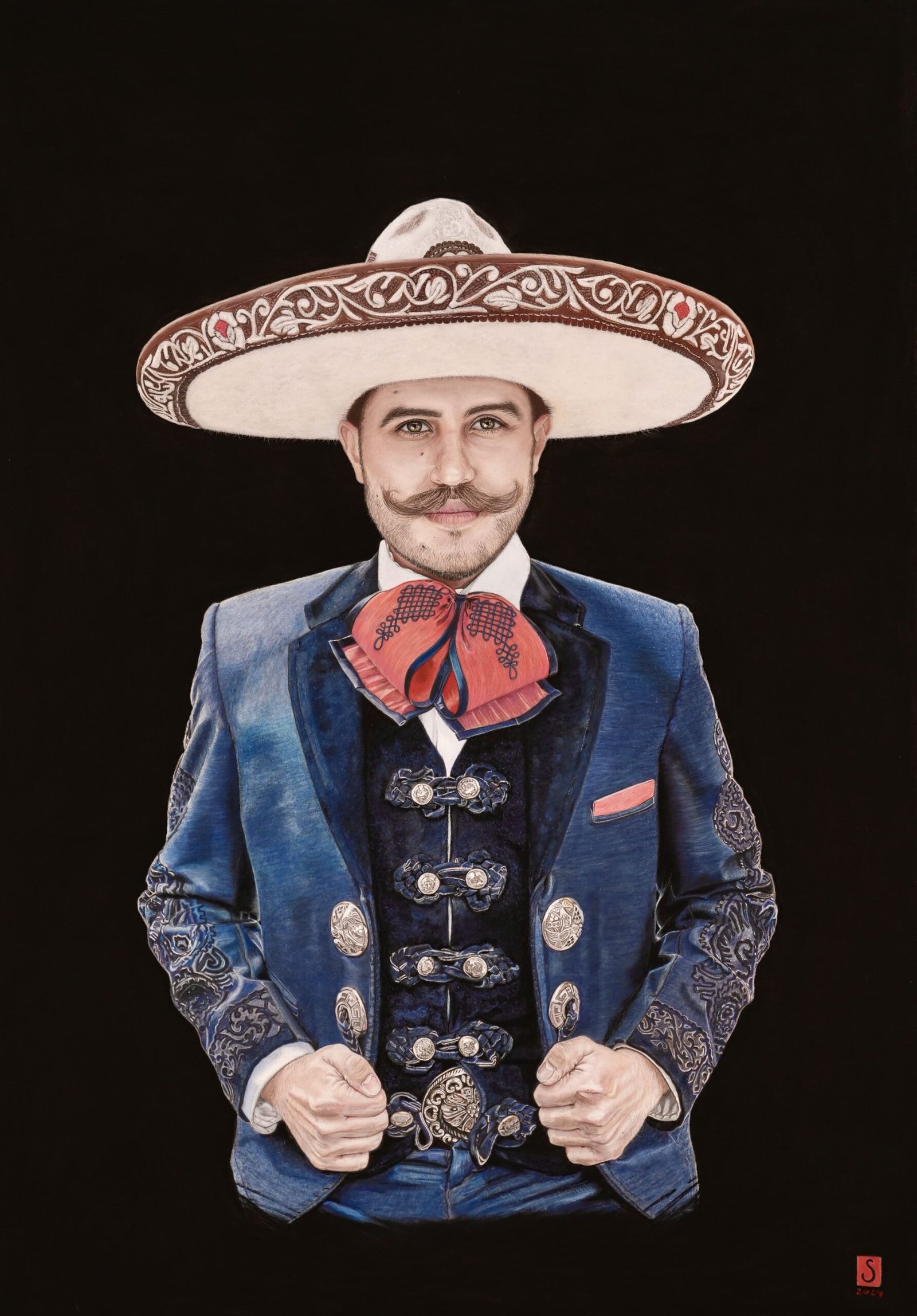
Before a single stroke of color touches the paper, there is a photograph. Before the photograph, there is a moment a face glimpsed somewhere in the world that stops Sylvianne Blum Cassereau mid-step and asks to be remembered. This is where every one of her pastel portraits begins, long before the pigment enters the picture.
Understanding Blum Cassereau’s work means understanding her process, because for this Mexican artist, technique and meaning are inseparable. The way a portrait is made shapes what it is finally able to say.
Step One: Seeing Before Painting
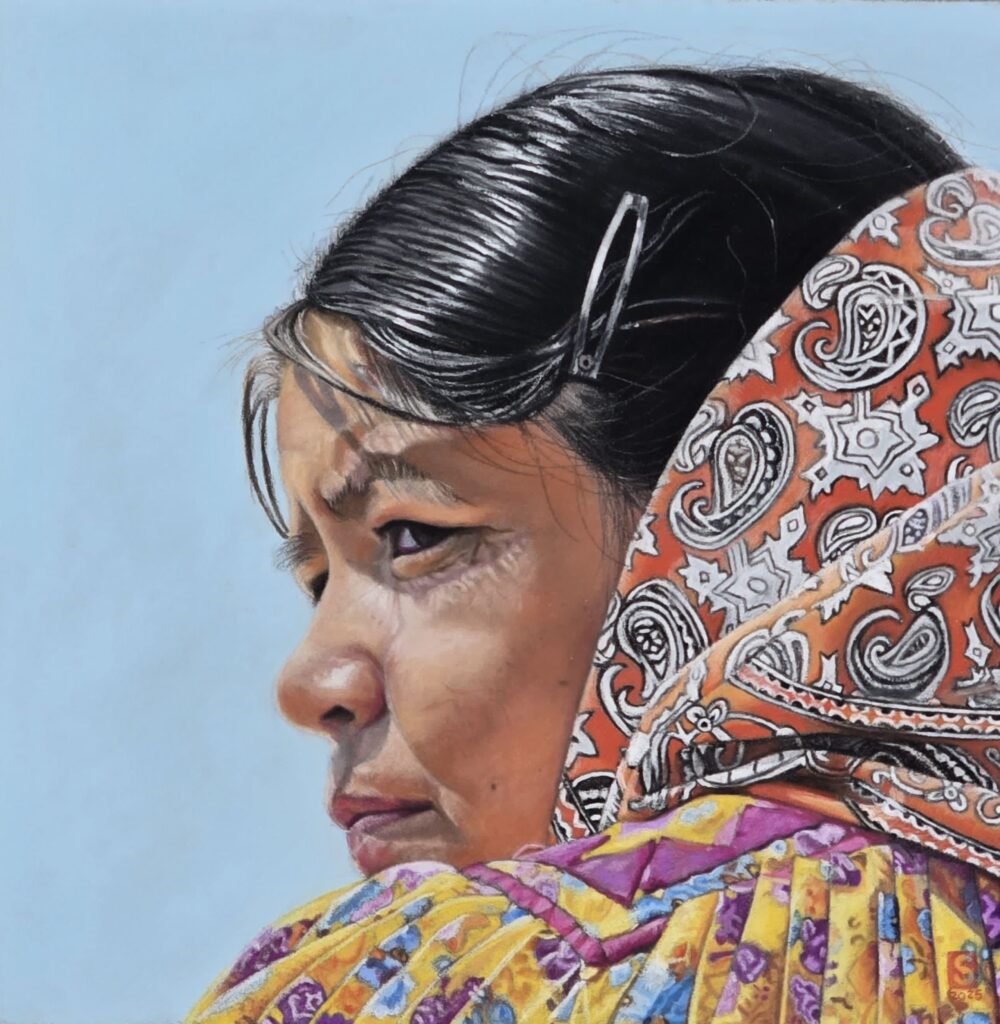
Blum Cassereau’s practice starts with observation. Traveling extensively, she encounters people, cultures, and scenes that catch her attention, sometimes a single face in a crowd, sometimes a fleeting gesture or expression. Rather than sketching on site, she photographs these moments herself, building a personal archive of images that later becomes the raw material for her studio work.
This reliance on her own photography, rather than found or commissioned images, matters. It means every reference she works from carries the memory of an actual meeting, filtered through her own eye and instinct for what deserves attention. The photograph is not a shortcut around observation; it is an extension of it.
Step Two: Choosing the Pigment
Soft pastel is Blum Cassereau’s primary language, and it is worth pausing on why. Unlike paint applied with a brush, pastel offers direct contact between hand and pigment, a physical closeness between artist and material that shapes the resulting image. There is little room for detachment when color is being pressed onto paper with one’s own fingers.
This directness demands confidence. Mistakes in pastel are harder to disguise than in oil, where layers can be scraped back or painted over indefinitely. Working in pastel means committing to each mark with a kind of decisiveness that leaves its trace in the finished piece, a visible record of the hand that made it.
Step Three: Building in Layers
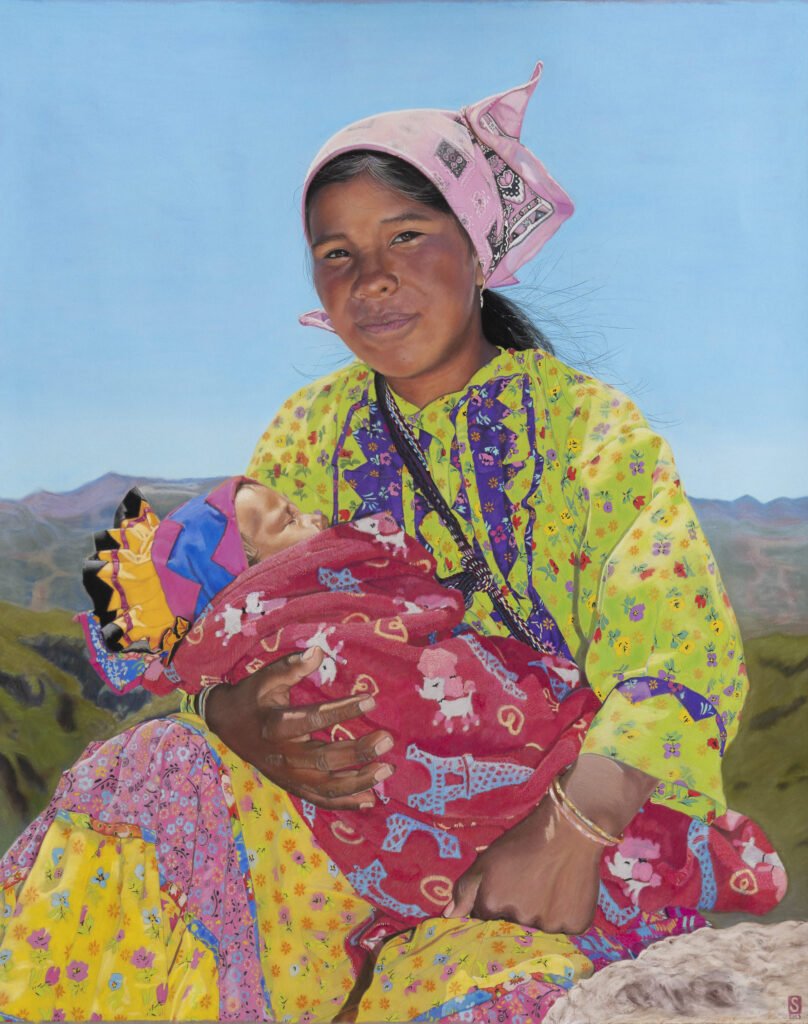
From that first contact, Blum Cassereau constructs her portraits through successive layers of color. This is not a single application but an accumulation, each layer refining and complicating what came before. Skin tones, in particular, receive this layered treatment, since flesh is rarely a single, flat color. Warmth here, coolness there, a flush near the cheek, a shadow beneath the brow all of it built gradually, until the surface begins to hold something resembling the specific complexity of an actual person’s coloring.
The eyes demand a similar patience. Because so much of a portrait’s emotional charge lives in the gaze, Blum Cassereau devotes particular care to their construction the subtle gradations of color within the iris, the way light catches moisture, the small asymmetries that keep an eye from looking generic or mask-like.
Step Four: Attending to Detail
What separates a competent likeness from a portrait that feels genuinely inhabited is often a matter of detail the texture of hair catching light, the faint lines that map an expression, the particular curve of a mouth mid-thought. Blum Cassereau’s attentiveness to these details is not decorative. It is how she pursues her larger aim: moving past mere physical representation toward something closer to the sitter’s essence, their sensitivity, their interior strength.
Light and shadow play a structural role in this pursuit, carving form out of flat paper and giving the illusion of a face that occupies real space, breathes, and might, at any moment, shift expression.
From Studio to the World
The portraits that emerge from this layered, patient process have traveled well beyond the studio where they were made. Blum Cassereau’s work has appeared in exhibitions and art events in cities including New York, Barcelona, Madrid, Zaragoza, Venice, Rome, Cannes, Cortona, Perugia, Punta del Este, Taipei, and Hong Kong, along with features in international art books and magazines and recognition through selections and distinctions in international competitions.
That international presence is, in a sense, the natural extension of her process: a practice built on encounter, ultimately shared with audiences across radically different cultural contexts, each capable of recognizing something familiar in a stranger’s carefully rendered face.
A Process Still Unfolding
Crucially, Blum Cassereau does not treat her method as fixed. Working from her studio in Mexico City, she continues to experiment, testing new approaches to color, texture, and technique in her ongoing pursuit of a richer, more precise artistic language.
This restlessness is, perhaps, the most honest reflection of her subject matter. People resist finality, and so does the practice built around depicting them. Each new portrait is not a repetition of a formula but another attempt, layer by layer, encounter by encounter, to get a little closer to capturing what makes one particular human being unmistakably themselves.
Explore her latest portraits: Sylvianne Blum Cassereau’s Instagram