

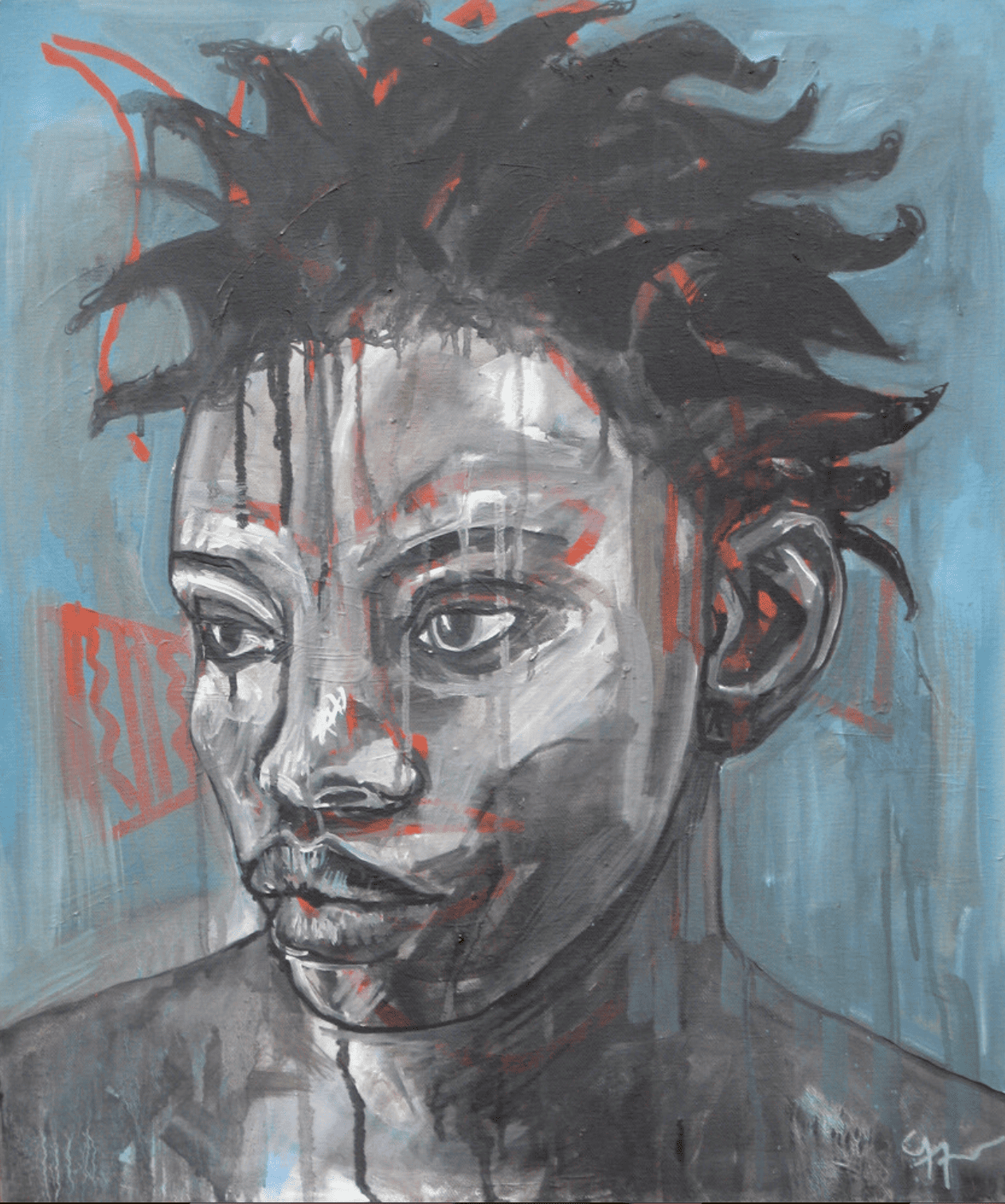
Gary Frier is an artist whose creative practice reflects a deeply personal engagement with culture, identity, history, and the world around him. Originally educated as a graphic designer, Frier has developed his artistic journey far beyond the boundaries of commercial design, building a diverse body of work that explores the complex relationship between individual experience and collective cultural consciousness.
Working across figurative, abstract, and expressionistic styles, Frier uses art as a space for reflection, questioning, and dialogue. His practice is characterized by a willingness to experiment with different visual languages and materials, allowing each work to communicate its own emotional and conceptual ideas. Through oils, acrylics, and linocuts, he creates works on surfaces including canvas and wood, bringing together traditional approaches and contemporary perspectives.
From Graphic Design to Fine Art
Frier’s background in graphic design has played an important role in shaping his artistic approach. Graphic design requires an awareness of composition, visual balance, form, symbolism, and communication. These principles remain visible in his fine art practice, where visual elements are carefully considered to convey ideas that extend beyond the surface of the work.
Over time, however, Frier’s creative direction evolved toward a more personal and introspective form of artistic expression. Rather than simply creating images, he began using his practice as a means of exploring his own relationship with culture, heritage, and identity.
This evolution has allowed Frier to develop a body of work that is both visually diverse and conceptually connected. Whether working in a figurative style or moving toward abstraction and expressionism, his artworks often reflect an underlying interest in how people understand themselves and their place within a broader cultural landscape.
Exploring Cultural Identity and Consciousness
A central theme in Gary Frier’s work is the exploration of cultural identity and consciousness. His art examines the ways in which personal identity can be shaped by history, geography, heritage, and social experience.
Frier frequently incorporates African cultural artifacts and symbolism into his work. These elements serve not simply as decorative references but as powerful visual tools through which he can investigate historical narratives and question established interpretations of African culture.
By reinterpreting cultural symbols within a contemporary artistic context, Frier creates opportunities for viewers to reconsider familiar ideas. His work challenges the ways in which history has been represented and understood, particularly through perspectives shaped by colonial and Western systems of knowledge.
This approach gives his art an important reflective dimension. His paintings and prints become spaces where cultural memory can be examined, questioned, and reimagined.
Between Western Education and African Heritage
The dialogue between Frier’s Western art education and his African heritage is an essential part of his creative identity. His practice emerges from the meeting point between these two influences, creating a space where different artistic traditions and perspectives can interact.
Rather than accepting inherited artistic frameworks without question, Frier seeks to examine them critically. His work reflects an ongoing effort to reconcile his education with his heritage while developing an artistic perspective that feels authentic to his own experience.
This process is closely connected to the idea of decolonizing art. For Frier, artistic practice provides an opportunity to reconsider dominant narratives and explore alternative ways of seeing culture, history, and identity. His work encourages viewers to think about who has traditionally been given the authority to tell cultural stories and how those stories might be approached differently.
The result is an artistic practice that is personal but also socially engaged. Frier’s work speaks to his own journey while opening broader conversations about representation, heritage, and cultural consciousness.
A Versatile Visual Language
Frier’s choice to work across figurative, abstract, and expressionistic styles reflects the versatility of his creative approach. Rather than being restricted to a single visual language, he allows the subject and concept of each artwork to influence its form.
His use of oils and acrylics provides opportunities for rich color, texture, and expressive mark-making, while linocut allows him to explore the relationship between positive and negative space, contrast, and graphic form.
Working on different substrates, including canvas and wood, further expands the possibilities of his practice. Each material brings its own qualities and physical presence, contributing to the atmosphere and meaning of the finished work.
This diversity of techniques reflects an artist who sees experimentation as an important part of creative development. The materials are not merely tools for producing images; they become part of the conversation between the artist, the subject, and the viewer.
Art as Social Commentary
For Frier, art is also a way of documenting his personal relationship with culture, place, and identity. His works can be understood as visual records of an ongoing process of reflection, allowing him to explore questions that may not have simple answers.
Through his artistic practice, he considers the connections between individual identity and larger social histories. His works encourage viewers to think critically about cultural narratives and the assumptions that influence how people see themselves and others.
This socially conscious approach gives his art relevance beyond the studio. Frier’s work demonstrates how contemporary art can function as both personal expression and social commentary, creating a space where individual experience can intersect with broader cultural conversations.
Making Art Accessible
Alongside his creative practice, Frier has demonstrated a commitment to making art more accessible. He actively supports the idea that original artwork should be available to a wider audience, including by pricing his work affordably.
His involvement with NGOs and cultural institutions further reflects his belief in the importance of art as a shared cultural resource. Through collaborations, exhibitions, and workshops, he has contributed to wider engagement with artistic practice and cultural dialogue.
This commitment is an important part of his broader artistic philosophy. For Frier, art is not something that should exist only within exclusive spaces. It can be a tool for connection, education, reflection, and community engagement.
An International Artistic Reach
Throughout his career, Gary Frier has exhibited both locally and nationally, taking part in exhibitions and workshops that have supported his continued artistic development and recognition. His work has also found its way into public and private collections across several countries, demonstrating the international reach of his practice.
These collections represent more than the geographical expansion of his career. They reflect the ability of his work to connect with audiences across different cultural and social contexts.
At the heart of Gary Frier’s artistic journey is a continuing exploration of identity. His work brings together his experiences, education, heritage, and observations of the world to create a practice that is both personal and socially aware.
Through painting and printmaking, he examines culture and consciousness while questioning historical narratives and exploring the process of decolonizing artistic perspectives. His art stands as a reflection of his ongoing relationship with place, heritage, and identity.
As Gary Frier continues to develop his practice, his work remains rooted in the belief that art can do more than represent the world. It can question it, challenge it, reinterpret it, and create new ways of understanding the stories that shape our collective consciousness.