

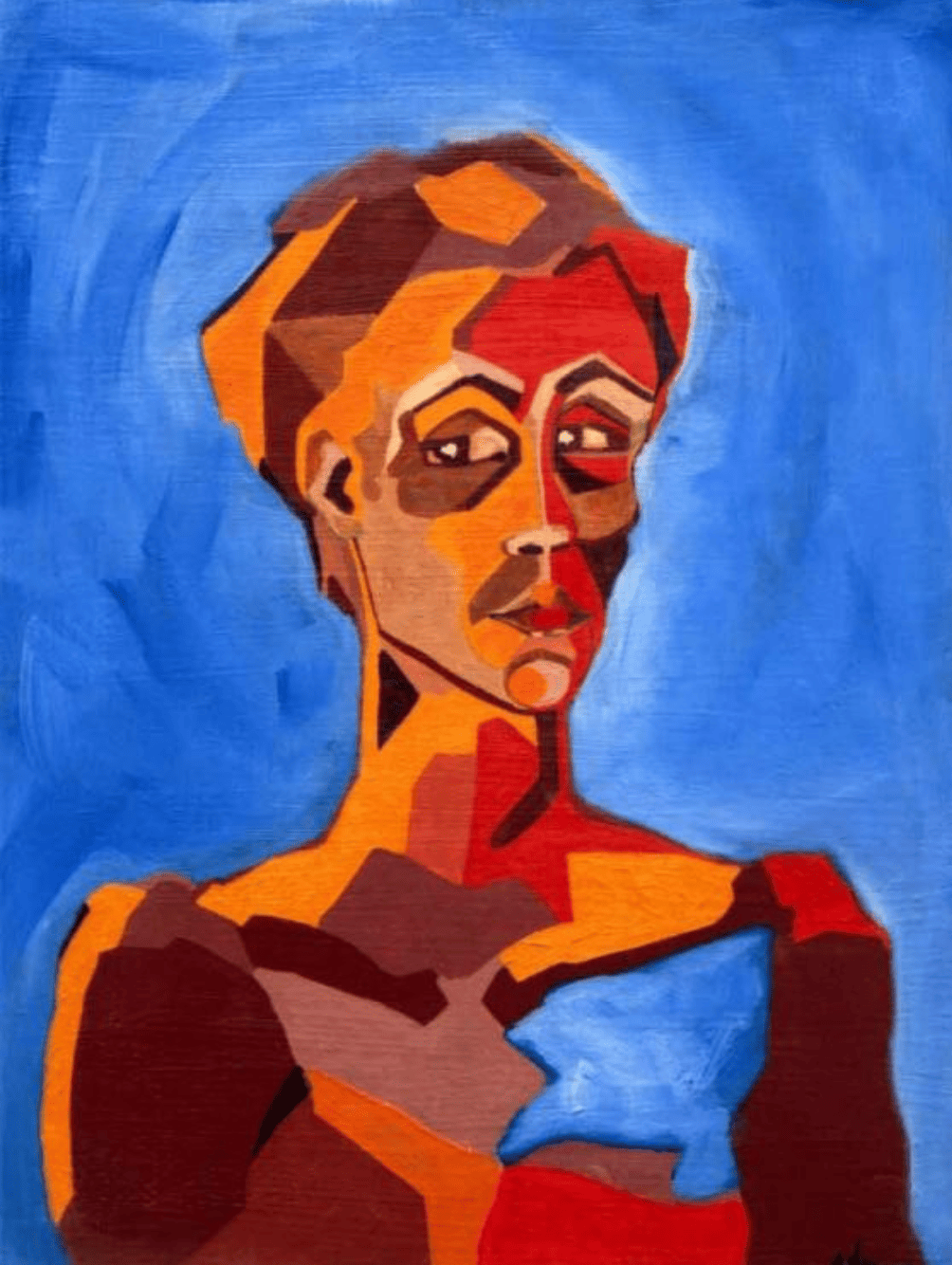
Alexandra Neves is an artist whose creative practice explores the human figure through emotionally expressive paintings that reflect themes of solitude, introspection, and personal experience. With an academic background that encompasses photography, sculpture, and drawing, Alexandra has developed a multidisciplinary foundation that informs her approach to painting and visual expression.
Her artistic journey is characterized by a sensitivity to the relationship between the human figure and its surroundings. Through the use of color and line, she creates compositions that encourage viewers to pause and reflect, often placing figures within environments that evoke a quiet sense of isolation and contemplation.
Alongside her own creative practice, Alexandra is also committed to sharing her knowledge with others. As a drawing and painting teacher in Vila Nova de Milfontes, she contributes to the development of emerging artists, combining her experience as a practicing artist with her role as an educator.
A Foundation in Fine Arts
Alexandra Neves holds a degree in Fine Arts from Parktown College for Vocational Education in Johannesburg, South Africa. During her studies, she specialized in Photography, Sculpture, and Drawing, developing skills across several different artistic disciplines.
Her academic achievements were recognized with honorary distinctions in both Drawing and Sculpture.
This multidisciplinary training has provided Alexandra with a broad understanding of visual communication. Each medium offers a different way of observing and interpreting the world, and her experience across these fields has contributed to the development of her artistic perspective.
Drawing has given her a strong foundation in line, proportion, and the structure of the human figure. Sculpture has encouraged an understanding of form and three-dimensional space, while photography has provided another way to consider composition, atmosphere, and the relationship between subjects and their environments.
Together, these disciplines have created a strong foundation for her current work as a painter.
A Focus on Painting
Today, Alexandra dedicates much of her creative energy to painting.
Her artistic practice centers on the human figure, which she places within environments that often evoke solitude and introspection. Rather than presenting the figure simply as a physical subject, she uses it as a means of exploring emotional and psychological experiences.
The environments surrounding her figures become an important part of the narrative.
A solitary figure can communicate feelings of isolation, reflection, vulnerability, or quiet contemplation. By creating space around the human form, Alexandra allows viewers to consider the emotional relationship between the individual and their surroundings.
Her paintings encourage a slower form of engagement, inviting audiences to look beyond the immediate image and consider the feelings that may exist beneath the surface.
The Human Figure as an Emotional Subject
The human figure has long been an important subject within the history of art, offering artists a way to explore identity, emotion, and personal experience.
For Alexandra, the figure becomes a central point through which these ideas can be examined.
Her approach is not solely focused on physical representation. Instead, the figures within her work appear to exist within emotional environments.
The surrounding space can be just as important as the individual.
This relationship between person and environment creates a sense of psychological depth. The viewer may begin to wonder what the figure is thinking, what has brought them to that particular place, or what experiences exist beyond the moment captured in the painting.
Through this open-ended approach, Alexandra creates space for personal interpretation.
Solitude and Introspection
Solitude is a recurring emotional quality within Alexandra’s artistic practice.
Her figures often appear within environments that encourage contemplation, creating an atmosphere that feels quiet and reflective.
However, solitude does not necessarily have to represent loneliness.
It can also suggest a moment of self-discovery or an opportunity to reconnect with one’s inner world.
Alexandra’s paintings explore this more nuanced understanding of being alone.
The figure becomes an individual experiencing a private moment, while the viewer is given the opportunity to observe and interpret that experience.
This sense of quietness gives her work an introspective quality, encouraging audiences to consider their own emotional responses and personal experiences.
Expression Through Color
Color plays an important role in Alexandra’s artistic language.
Rather than treating color simply as a tool for reproducing reality, she uses it as a means of expression.
Colors can influence the emotional atmosphere of a painting, shaping how viewers respond to the figure and the surrounding environment.
Subtle or muted tones can create a sense of calm and contemplation, while stronger contrasts can introduce tension and emotional intensity.
Through her use of color, Alexandra adds another layer of meaning to her compositions.
The palette becomes part of the emotional narrative, helping communicate feelings that may not be easily expressed through the figure alone.
The Importance of Line
Alongside color, line is another essential element within Alexandra’s work.
Her background in drawing has given her a strong understanding of the expressive possibilities of line.
Lines can define the human figure, establish movement, create structure, or suggest emotion.
They can also contribute to the overall rhythm of a composition.
In Alexandra’s paintings, the interaction between line and color creates a visual language that is both sensitive and personal.
The two elements work together to establish the character of her figures and their environments.
This balance reflects her artistic background while allowing her to develop an individual approach to painting.
From Photography and Sculpture to Painting
Alexandra’s experience with photography and sculpture continues to inform her artistic perspective.
Photography encourages close observation of moments, spaces, and compositions. It teaches an artist to consider what is included within a frame and what remains outside it.
Sculpture, meanwhile, encourages an understanding of physical form and the relationship between objects and space.
These experiences can be seen as complementary to Alexandra’s current focus on painting.
Her figures exist within environments that feel carefully considered, while her attention to form reflects her experience across different artistic disciplines.
Rather than treating her previous studies as separate from her current practice, Alexandra’s work demonstrates how knowledge gained through different mediums can contribute to a more developed artistic vision.
A Sensitive Artistic Approach
Sensitivity is an important characteristic of Alexandra’s creative practice.
Her paintings focus on quiet moments rather than dramatic scenes, allowing emotion to emerge through atmosphere, color, and composition.
This approach creates a sense of intimacy between the artwork and the viewer.
Instead of telling viewers exactly what to feel, Alexandra leaves room for interpretation.
Her figures and environments become starting points for reflection.
Each viewer may bring their own experiences to the work, finding personal connections within the themes of solitude, identity, and introspection.
This openness is part of what gives her paintings their emotional resonance.
Art and Education
Alexandra Neves’ artistic contribution extends beyond her own studio practice.
She also teaches drawing and painting in Vila Nova de Milfontes, sharing her knowledge and experience with students and aspiring artists.
Teaching provides an opportunity to encourage creativity while helping others develop their own technical and artistic skills.
For Alexandra, this role creates a connection between her experience as an artist and her commitment to artistic education.
Teaching drawing and painting also reflects the importance of foundational skills within her own practice.
Her background in drawing, sculpture, photography, and painting gives her a diverse range of knowledge that can be shared with students exploring their own creative paths.
Inspiring New Artists
Through her educational work, Alexandra contributes to the growth of the artistic community around her.
Every emerging artist develops through a combination of practice, observation, experimentation, and guidance.
By teaching, Alexandra can help students explore different ways of seeing and expressing themselves.
Her own journey demonstrates the value of a multidisciplinary artistic education.
Having worked across photography, sculpture, drawing, and painting, she understands that there are many different ways to approach visual expression.
This perspective can encourage students to remain open to experimentation and to discover the mediums and techniques that best reflect their individual voices.
A Journey Shaped by Different Contexts
Alexandra’s artistic trajectory reflects experience across different cultural and geographical contexts.
Her academic training in Johannesburg provided an important foundation for her development, while her current artistic and educational activities in Vila Nova de Milfontes have contributed to the continuing evolution of her practice.
Moving through different environments can influence an artist’s understanding of identity, place, and belonging.
These experiences can also introduce new perspectives and visual influences.
For Alexandra, the combination of her academic background and experiences in different cultural contexts has enriched both her personal artistic production and her work as an educator.
Developing a Personal Visual Language
Alexandra Neves continues to develop a visual language that brings together her interests in the human figure, emotion, color, and line.
Her work demonstrates how a strong artistic foundation can evolve into a personal and sensitive practice.
The influence of drawing can be seen in her attention to line and form. Her experience in sculpture contributes to her understanding of the figure and space, while her background in photography informs her approach to composition and atmosphere.
Painting provides a space where these different influences can come together.
The result is a body of work that explores human experience through a combination of visual sensitivity and emotional depth.
The Quiet Power of Reflection
Ultimately, Alexandra Neves’ artistic practice is centered on the quiet power of reflection.
Through paintings that place human figures within contemplative environments, she explores experiences that are universal yet deeply personal.
Her work suggests that moments of solitude can become opportunities for introspection and self-understanding.
Through expressive color and thoughtful use of line, Alexandra creates paintings that encourage viewers to slow down and engage with the emotional world presented before them.
Her journey from multidisciplinary Fine Arts training to her current focus on painting demonstrates a continuous process of artistic development. At the same time, her work as a teacher reflects her commitment to ensuring that creativity and artistic knowledge are shared with others.
By bringing together her experience in drawing, sculpture, photography, painting, and education, Alexandra Neves continues to build a distinctive artistic practice one that examines the human figure not only as a physical presence but also as a reflection of the complex inner experiences that shape our lives.