

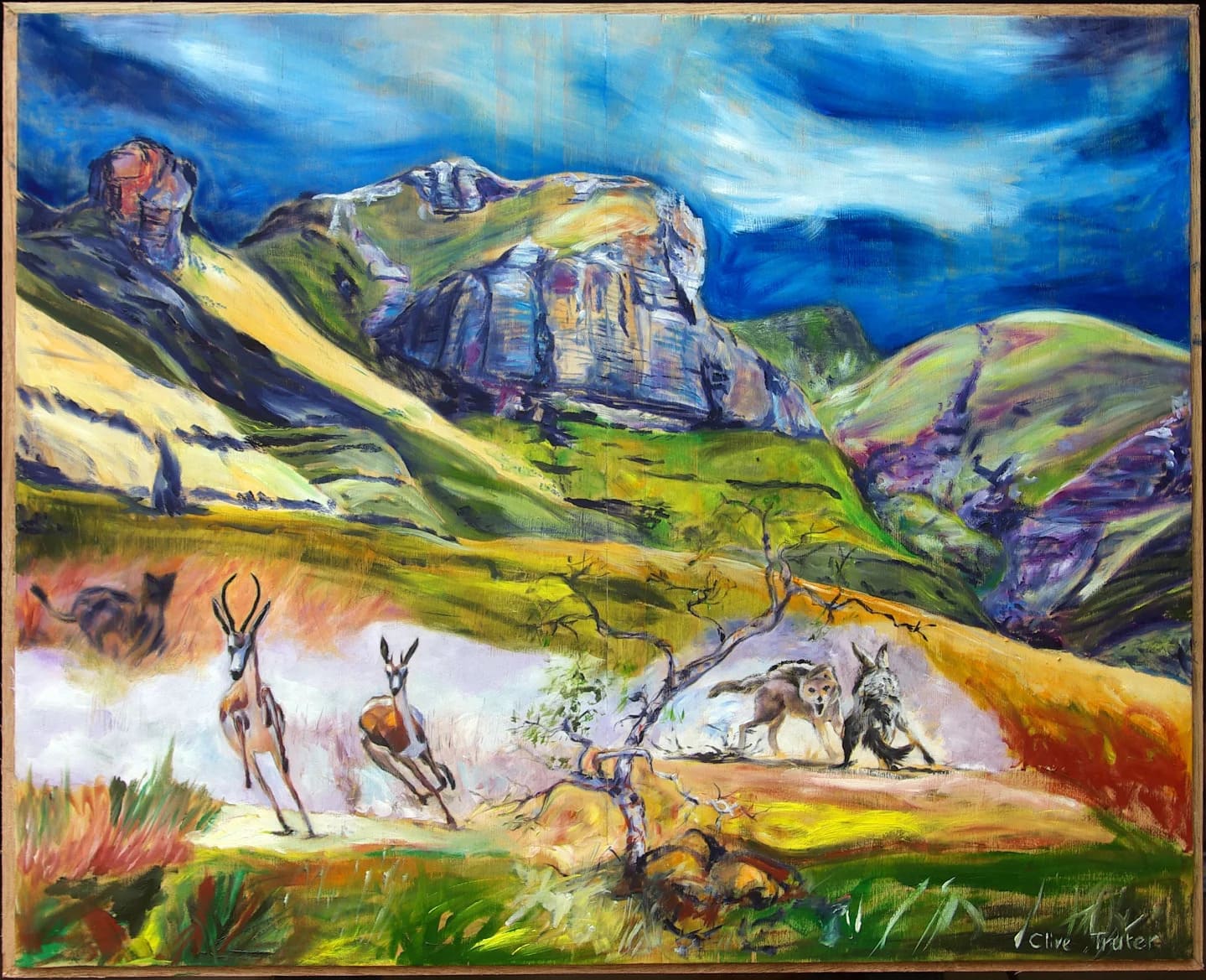
Clive Truter is an artist whose practice is deeply rooted in figurative painting, material exploration, and an enduring engagement with the natural world. Working primarily in oil on wood and canvas, Truter creates paintings in which the subject and the surface are not treated as separate elements. Instead, they exist in dialogue, allowing the physical qualities of the chosen material to become an active part of the image and its meaning.
His work often explores landscapes and scenes inspired by both natural and cultural environments, with African landscapes and the dramatic surroundings of the Drakensberg Mountains in KwaZulu-Natal serving as important sources of inspiration. Through his distinctive approach to painting, Truter brings together recognizable imagery and the unpredictable character of wood, creating compositions that are rich in texture, atmosphere, and layered interpretation.
For Truter, the surface on which a painting is created is not simply a background. Wooden planks, with their visible grain, knots, imperfections, and natural markings, become part of the artistic process. These qualities can influence the development of the image, creating an ongoing conversation between the artist’s intentions and the material itself.
The Dialogue Between Painting and Material
A defining characteristic of Clive Truter’s practice is his fascination with the relationship between painted imagery and the natural textures of his chosen substrates. While many artists carefully prepare their surfaces to eliminate imperfections, Truter embraces the distinctive characteristics of wood and allows them to remain visible within his compositions.
The grain of a wooden plank can introduce lines and patterns that interact with painted forms. Knots and irregularities can become unexpected visual features, contributing to the atmosphere or meaning of the work. Rather than concealing these natural qualities, Truter incorporates them into the creative process.
This approach creates a sense of tension between the controlled and the unpredictable. The painted image represents the artist’s creative decisions, while the natural surface introduces an element that cannot be completely controlled. Together, they form a dynamic relationship in which the material participates in the evolution of the artwork.
The result is a form of painting in which the physical object and the represented subject become inseparable.
Landscapes Inspired by Africa
Landscape is an important element of Truter’s artistic vocabulary. His paintings often draw inspiration from natural and cultural environments, particularly the distinctive landscapes of Africa.
The African landscape offers an extraordinary range of visual possibilities, from expansive spaces and changing skies to rugged terrain and dramatic contrasts of light. Truter responds to these environments through a figurative approach that allows the landscape to remain recognizable while also transforming it into something more poetic and interpretive.
The Drakensberg Mountains of KwaZulu-Natal are among the environments that have influenced his artistic vision. Known for their imposing geological forms and powerful natural presence, the mountains provide a compelling subject for an artist interested in the relationship between place, material, and memory.
In Truter’s work, landscapes can become more than geographical representations. They can function as visual reflections on a sense of place, inviting viewers to consider their own emotional and sensory responses to the environment.
Oil Painting on Unconventional Surfaces
Oil paint is central to Truter’s practice, but his approach to the medium is distinctive because of the unconventional surfaces on which he works.
Rather than restricting himself to traditional canvas, he often applies oil paint to thin wooden panels and cottonwood planks. These surfaces bring their own history and physical character to the work, creating possibilities that a conventional, uniform surface might not offer.
Oil paint is particularly well suited to this approach because of its ability to build layers, create depth, and interact with the texture beneath it. The contrast between the smooth or expressive application of paint and the natural grain of wood creates a complex visual surface.
In some works, the texture of the wood may remain clearly visible, while in others it may become integrated more subtly into the composition. This interplay allows the surface to influence how the viewer experiences the painting, encouraging closer observation of both the imagery and the material.
The Natural Surface as Part of the Story
For Truter, the physical qualities of his materials contribute directly to the meaning of each piece. The wood is not simply a support for the artwork; it becomes part of the visual narrative.
The knots, grain patterns, and irregularities of a plank can suggest movement, age, history, or the passage of time. These characteristics may interact with the painted subject in ways that create unexpected associations.
This makes each artwork a collaborative process between the artist and the material. Truter begins with an intention, but the surface itself can influence how the painting develops. The natural structure of the wood introduces possibilities that may not have existed in the artist’s original conception.
Such an approach creates a sense of discovery within the creative process. The final work becomes a record of both artistic decision-making and the inherent character of the material.
Creating Tension and Synergy
The relationship between figurative imagery and natural material creates an important tension within Truter’s compositions. The viewer may recognize a landscape or scene, but the image is simultaneously interrupted and enriched by the physical qualities of the surface.
This tension creates visual energy. The painted elements and the wood appear to coexist rather than compete, producing a synergy between representation and abstraction.
The result is an artwork that can be appreciated on multiple levels. From a distance, the viewer may first encounter the overall image or landscape. As they move closer, the textures and markings of the wooden surface become increasingly apparent, revealing another layer of visual information.
This shift between distance and proximity encourages a slower, more attentive form of viewing.
Beyond Verbal Description
There is a poetic quality at the heart of Clive Truter’s work. His paintings suggest that visual experience can communicate ideas and emotions that are difficult, perhaps even impossible, to fully express through language.
A landscape can evoke a memory without explaining it. A texture can suggest the passage of time without providing a specific narrative. A painted figure or environment can create an emotional response that exists beyond literal description.
Truter’s work embraces this elusive quality of visual storytelling. Rather than attempting to provide definitive explanations, his paintings leave room for interpretation and personal response.
The combination of figurative imagery, expressive oil painting, and naturally textured wood allows his work to operate in this space between the recognizable and the mysterious.
A Deep Engagement With Environment and Medium
Clive Truter’s artistic practice reflects a profound engagement with both the environment and the physical act of painting. His landscapes and figurative works draw attention to the places that inspire him, while his choice of materials creates an additional connection with the natural world.
By painting on wood and allowing its grain, knots, and imperfections to remain part of the artwork, Truter creates a direct relationship between his subjects and the materials he uses. The landscape is not merely represented on the surface—it is echoed by the very nature of the surface itself.
This relationship gives his paintings a distinctive sense of depth and authenticity. Each work becomes an encounter between image and material, intention and chance, nature and artistic interpretation.
Painting as a Poetic Encounter
Clive Truter’s paintings demonstrate the possibilities that emerge when an artist allows the subject and the material to exist in constant dialogue. His use of oil on wood and canvas creates a practice that is simultaneously figurative, tactile, and deeply connected to the natural world.
Through landscapes inspired by Africa and environments such as the Drakensberg Mountains, he explores the emotional and visual power of place. Through wooden planks and panels, he embraces the unpredictability and beauty of natural surfaces.
His work ultimately reminds viewers that painting can be more than an image applied to a surface. It can be an object with its own physical presence, history, and character. In Truter’s hands, the grain of wood, the texture of oil paint, and the imagery of the landscape come together to create visual narratives that resist simple explanation.
The result is a body of work that invites contemplation—an artistic space where environment, material, and imagination meet, allowing viewers to discover meanings that extend beyond what words alone can describe.